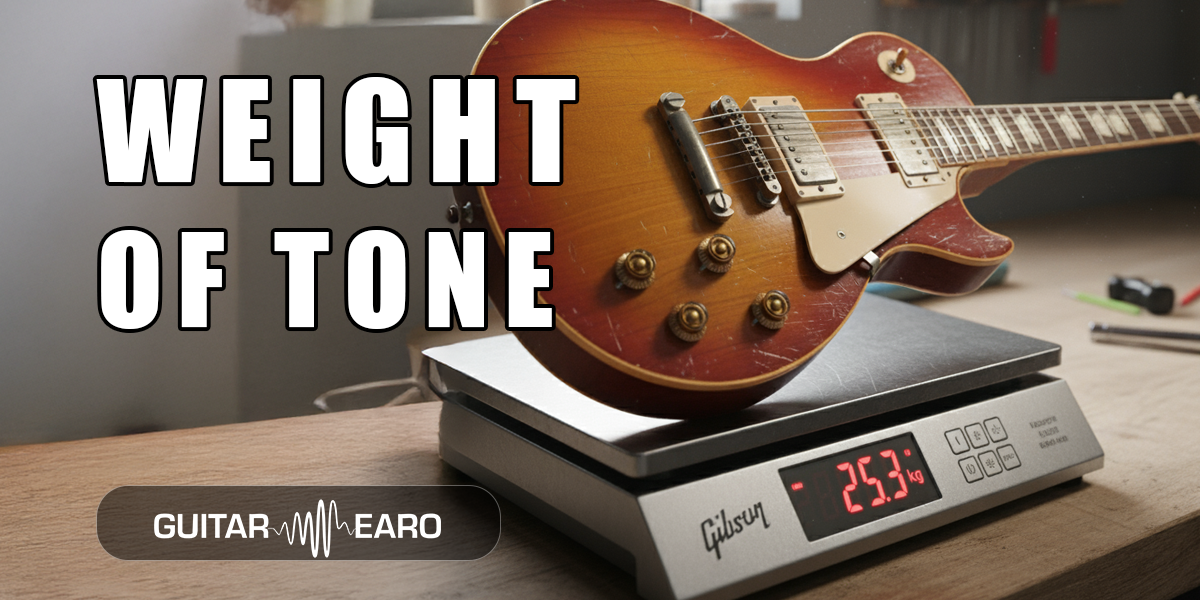
“Do heavier guitars have more sustain?” is one of the oldest gear arguments online. It sounds physical: more wood, more inertia, notes ring forever. Vintage forum wisdom from the 1970s even tied Norlin-era heavy Les Pauls to “better sustain.”
Sometimes a heavy guitar sustains well. Not because the number on the scale is high. Weight correlates with density, construction, hardware, and era. Sustain is how long the string keeps moving after you attack. Those overlap. They are not the same variable.
What sustain actually is
In Electric Guitar and Bass Design (Chapter 12: Secrets of Sustain), sustain means the note keeps audible after the pluck. On electric guitar that is mostly string energy minus losses at the nut, bridge, frets, pickups, and body coupling.
Luthier Ervin Somogyi’s reminder appears in that same tradition: on jazz archtops, endless sustain can be a problem because the next chord arrives immediately. On electric solids, we usually want enough sustain to sing, not necessarily infinite violin decay.
Why “heavy = sustain” took hold
Several stories stacked.
Late-’70s heavy Les Pauls: players equated 9–10+ lb instruments with thick, sustaining leads.
Les Paul origin R&D: Gibson’s team found all-mahogany prototypes too heavy; all-maple too bright and ringing. The maple-cap-on-mahogany sandwich targeted tone and manageable mass (see Amplified / Holy Trinity research in Guitar Earo’s archive).
Extreme experiments: design notes describe a steel rail test piece that rang “until you could walk out for a beer.” Real guitars are compromises, not rails.
Marketing then compressed the lesson to: buy the heavy one.
Meanwhile, many celebrated 1958–60 bursts weigh less than later slabs yet are famously resonant. Weight alone fails the historical test.
Mass vs stiffness: the wood chapter
The same design text is explicit:
It is commonly assumed that a heavy, hardwood will contribute to better sustain than a lighter one. But, in fact, some lighter woods have been proved to sustain better. Why is that? Because sustain is related to stiffness, and not necessarily to the wood’s density.
A dense body can add weight on your shoulder without giving the string a better termination. A stiff, well-coupled neck and bridge setup can help energy stay in the string regardless of whether the body is alder or mahogany.
For shoppers: heft in the hand ≠ long decay in the amp.
Neck joint myths (measured, not forum lore)
Another sustain surprise from measured lutherie research (R.M. Mottola, American Lutherie #91, summarized in Electric Guitar and Bass Design):
On a controlled single-string rig with the same wood:
- Bolt-on neck measured longer sustain than set-neck.
- Neck-through measured least sustain of the three.
- Differences were real in software, imperceptible to most ears in the same study’s takeaway.
The hierarchy “neck-through > set-neck > bolt-on for sustain,” repeated for decades, does not hold in that experiment. A well-routed, tight neck pocket matters more than joint theology.
What actually steals or adds sustain
From design practice and setup literature, these move the needle more than a bathroom scale:
| Factor | Effect |
|---|---|
| Pickup height | Too close: magnetic pull dampens string motion (“string pull”) |
| Nut and bridge slots | Poor seating: energy lost at boundaries |
| Scale length | Longer scale: more tension and inertia; slightly longer decay (all else equal) |
| Bridge type | Fixed / string-through often cited for efficient coupling |
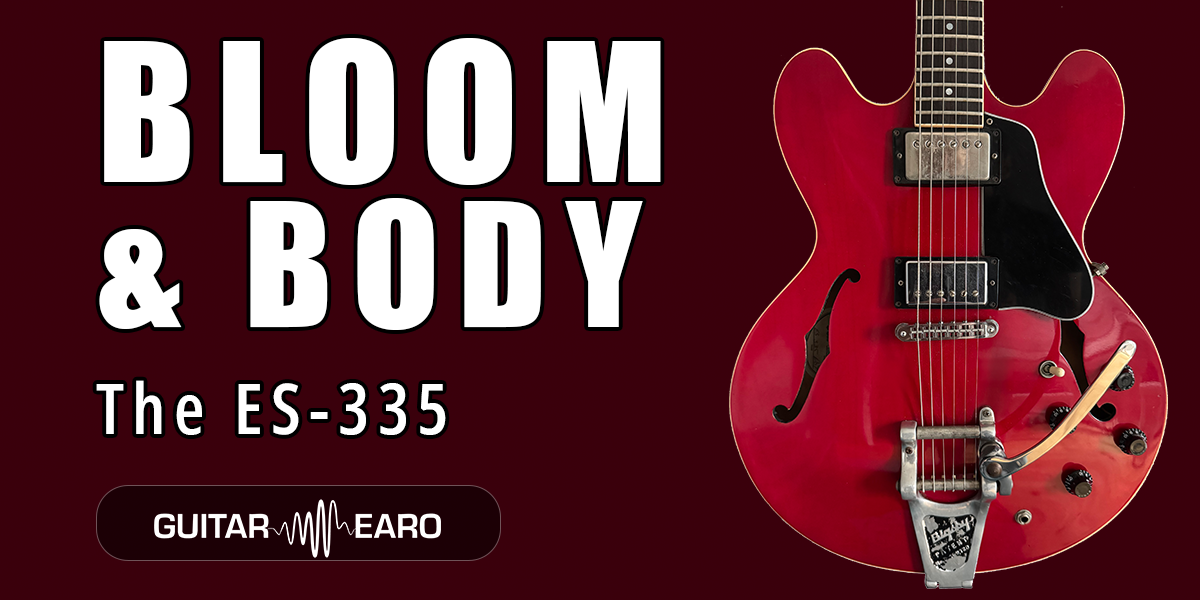
| Construction | Semi-hollow bloom vs solid stable decay: different envelope, not “more sustain” in the same sense |
| Amp gain | Compression masks decay; clean reveals it |
Semi-hollow bloom is often mistaken for “more sustain.” The note swells after attack, which is timing behavior. A Les Paul weight is thick density that holds differently. Guitar Earo trains those as separate cues.
Heavy vs light in the real world
Research digests in Guitar Earo’s design archive note the 1970s heavy = sustain belief, plus pushback: chambered and lighter guitars can feel livelier because less mass absorbs differently. Not automatically worse.
Travis Bean’s metal construction is the extreme case: mass and stiffness together changed coupling. Copying only the weight without the system misses the point.
When comparing two guitars in a store:
- Weigh them for comfort, not prophecy.
- Listen clean, same part, same setup.
- Ask whether decay is long or swollen (bloom).
- Check pickup height before blaming the body.
How Guitar Earo teaches it
The app separates weight (tonal descriptor) from construction envelope. Not “guess the pounds.”
Tone Orientation
- Anatomy of Tone: sustain as vocabulary alongside brightness, bite, and response.
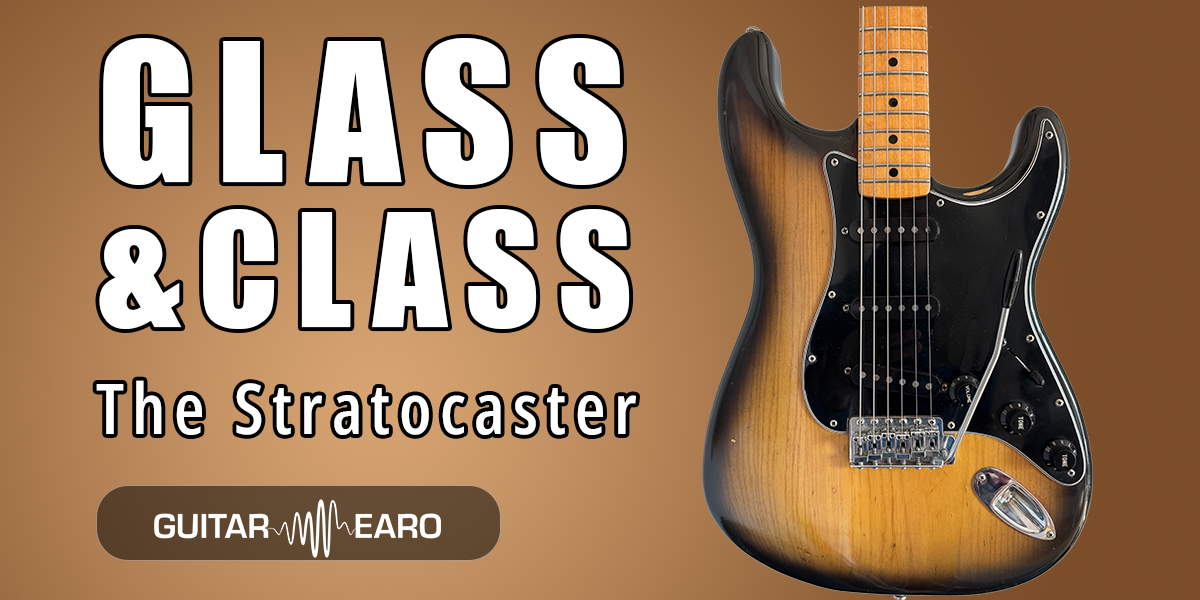
- Wood & Weight: the Les Paul: thick, dense, sustaining humbucker identity vs Strat glass (matched A/B, not scale readings).
- Airy Electrics / ES-335: bloom vs solid immediate attack; avoids calling bloom “extra sustain” on a heavy solid.
- Construction Concepts: Bloom vs Stability, Solid vs Semi vs Hollow, Envelope Beats EQ (time behavior over “heavy wood” myths).
- Wood’s Subtle Influence: electric solids: wood is subtle and non-regressive; you cannot hear species reliably in a blind test.
Tone Discrimination & Judgement
- Les Paul vs SG: weight vs bite under masking (same HB family).
- Gibson Solid Trap exams: when sustain and brightness collapse, weight vs bite still separates.
Training uses matched recordings so you compare decay character, not different players or rigs.
What to do next
Before you pay a premium for a “heavy sustain machine,” A/B a lighter instrument with proper setup and matched signal path. If the heavy guitar wins, you are hearing coupling and build, not the scale.
Read Anatomy of Tone for the three building blocks, then train Wood & Weight and Bloom vs Stability in Guitar Earo.
Download the app and try the 7-day free trial. Compare decay and density with instant A/B, then learn what you are listening for.